
Best AI Recruiting Tools in 2026: 18 Platforms Compared
Compare the 18 best AI recruiting tools and automation platforms for 2026. Features, pricing, and which tool fits your hiring team best.

By: Deepit Patil
Co-Founder and CTO
Published
Updated
Edited by Craze Editorial Team · See our Editorial Process
You have twelve open reqs, a hiring manager who needed candidates yesterday, and a sourcing pipeline that has not been touched in a week because you spent the morning scheduling interviews. That is the reality for most recruiters right now, and it is exactly why AI recruiting tools have gone from nice-to-have to non-negotiable.
According to SHRM’s 2026 research, 27% of organizations now use AI tools specifically in recruiting, with overall HR AI adoption at 39%. The category has gotten noisy. There are sourcing tools, scheduling tools, conversational AI assistants, full-platform ATS solutions, talent intelligence suites, and general-purpose automation platforms, all claiming to handle recruiting. Picking the wrong one means paying for features you will not use or, worse, stitching together four tools that do not talk to each other.
This guide compares 18 AI recruiting tools and automation platforms for 2026, split into two groups: automation platforms that can handle recruiting workflows alongside other use cases, and dedicated recruiting tools built specifically for hiring. You will find pricing, honest assessments, and a clear verdict on who each tool fits.
TL;DR
- Automation platforms (Craze, Make, n8n, Zapier) let you build custom recruiting workflows using AI agents and integrations. Best for teams that want flexibility or already use multiple tools.
- Greenhouse and SmartRecruiters lead for structured, compliance-first ATS hiring at scale.
- Eightfold AI leads for enterprise talent intelligence, skills-based hiring, and internal mobility.
- Paradox (Olivia) is the strongest conversational AI for high-volume and hourly hiring.
- hireEZ and Juicebox are the best options if your bottleneck is sourcing specifically.
- Scroll to the comparison table for a snapshot of all 18 tools, or start with the how-to-choose framework to narrow your options first.
How to Choose an AI Recruiting Tool
Before jumping into reviews, spend five minutes answering these questions. They will cut your shortlist from eighteen tools to three.
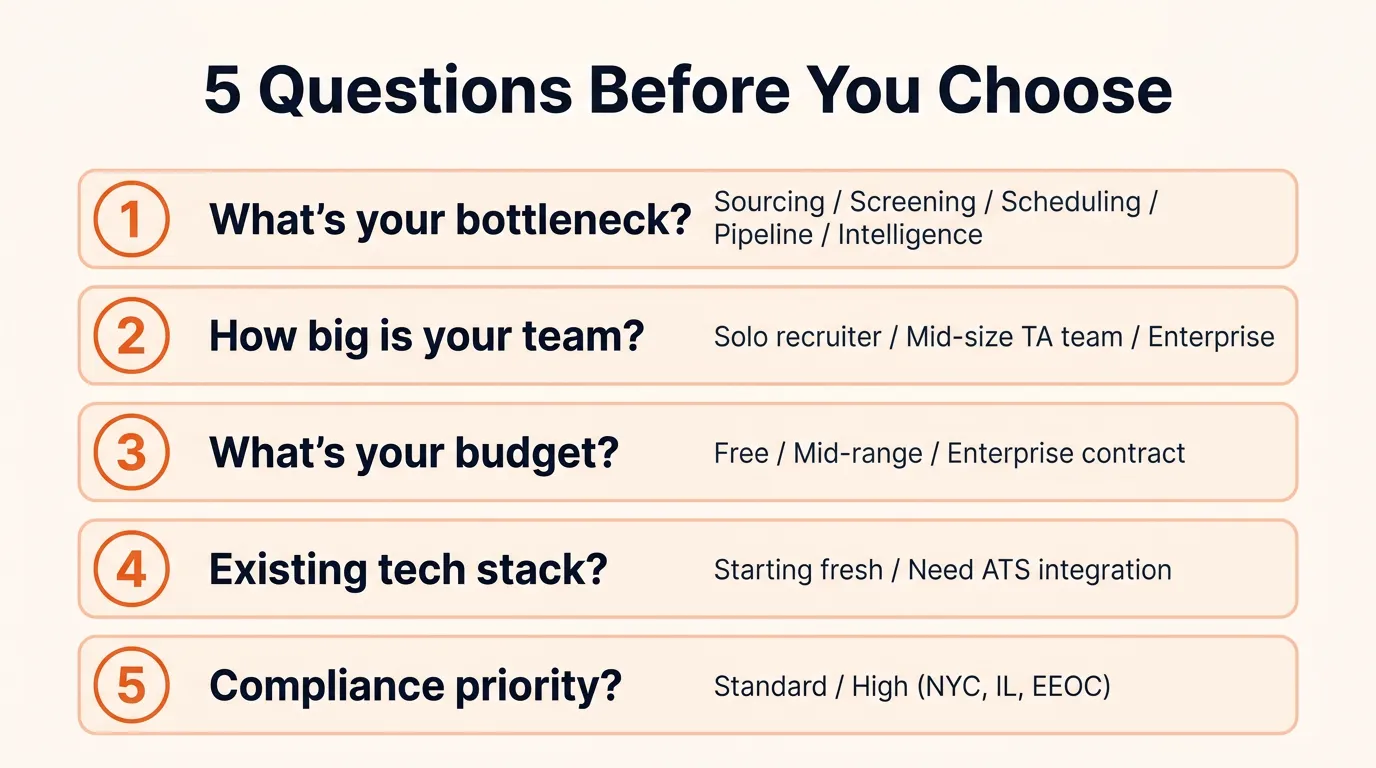
Where is your biggest hiring bottleneck?
AI recruiting tools are not one category. A team drowning in sourcing needs a different tool than a team losing candidates to slow scheduling. Map your pain:
- Sourcing: You need more qualified candidates entering the pipeline. Understanding AI-powered candidate sourcing will help you evaluate sourcing-focused tools.
- Outreach: Candidates are not responding to your messages.
- Screening: You are spending hours on resume review and initial calls.
- Scheduling: Interview coordination is eating recruiter time.
- Pipeline visibility: You cannot tell where candidates are or why they stall.
- Talent intelligence: You need workforce planning, internal mobility, or skills mapping.
- Cross-tool automation: You have multiple recruiting tools that do not talk to each other and need to connect them with custom workflows.
What is your team size and hiring volume?
A solo recruiter at a 50-person company needs a different tool than a 20-person TA team filling 200 roles per quarter. Some platforms are built for high-volume hourly hiring; others are designed for low-volume, high-touch executive search. Match the tool to your operating reality, not your aspirations.
What is your budget?
AI recruiting tools range from free to six figures annually. Pricing models vary: per seat, per job, per candidate, per workflow execution, or enterprise contracts. A free tool that requires three integrations to work can cost more in recruiter hours than a slightly pricier all-in-one platform. Think total cost, not sticker price. For a framework on evaluating that total cost, see how teams are measuring AI recruiting ROI.
What does your existing tech stack look like?
If you already have an ATS you like, you need a tool that integrates cleanly with it. If you are starting fresh, a dedicated all-in-one platform will save you from integration headaches. If you already use multiple tools and want to connect them, an automation platform like Make, n8n, or Zapier may be a better fit than adding another standalone tool.
Should you use an automation platform or a dedicated tool?
This is the decision most teams skip, and it matters. Dedicated recruiting tools ship pre-built workflows, domain-specific AI models, and recruiting-specific features. Automation platforms let you build custom workflows, connect existing tools, and handle recruiting alongside other business processes. The comparison table and reviews below are split into these two sections to help you decide.
How important is compliance?
US-based teams need to consider NYC Local Law 144 (bias audits for automated employment decision tools), the Illinois AIPA (consent for AI video interviews), and growing EEOC scrutiny of algorithmic hiring. Ask vendors: Can you produce a bias audit? Do you support candidate notification? Is your AI decision logic explainable?
With your priorities mapped, use the quick selector below to get a personalized recommendation, or scroll to the full comparison table .
Find Your Best-Fit Tool
What is your biggest hiring bottleneck?
Quick Comparison Table
| Tool | Section | Best For | Key AI Feature | Verdict |
|---|---|---|---|---|
| Craze | Automation Platform | Custom AI recruiting workflows | Multi-model AI agents + workflow automation | Best AI workspace for recruiting automation |
| Make | Automation Platform | Visual workflow automation | Scenario builder + 2,000+ app integrations | Best visual recruiting workflow builder |
| n8n | Automation Platform | Self-hosted or cloud automation | Open-source + AI workflow builder | Best for technical teams wanting control |
| Zapier | Automation Platform | No-code integrations | 7,000+ app connectors + AI agents | Best for no-code recruiting automation |
| Greenhouse | Dedicated Tool | Structured enterprise hiring | AI-assisted screening + scorecards | Best for process-driven teams |
| Workable | Dedicated Tool | SMB hiring with video | AI candidate suggestions + video interviews | Easiest all-in-one setup |
| hireEZ | Dedicated Tool | Outbound sourcing at scale | AI search across 800M+ profiles | Best pure sourcing engine |
| Juicebox | Dedicated Tool | NLP people search | Natural language candidate discovery | Best for non-technical sourcers |
| Fetcher | Dedicated Tool | Lean teams, outreach | AI + human-curated sourcing batches | Best hybrid AI + human sourcing |
| Gem | Dedicated Tool | Pipeline analytics + nurture | Multi-touch outreach + forecasting | Best outreach analytics |
| SeekOut | Dedicated Tool | Technical + diversity hiring | 1B+ profiles with patent/GitHub data | Best for niche technical roles |
| Paradox | Dedicated Tool | High-volume hourly hiring | Conversational AI (Olivia) | Best front-of-funnel automation |
| HireVue | Dedicated Tool | Enterprise video interviews | AI assessments + structured interviews | Best for video-first screening |
| Humanly | Dedicated Tool | Mid-size teams, DEI focus | AI chatbot + bias mitigation | Best conversational + DEI screening |
| Metaview | Dedicated Tool | Interview intelligence | AI note-taking + scorecards | Best for interview consistency |
| Eightfold AI | Dedicated Tool | Enterprise talent intelligence | Deep-learning matching + internal mobility | Best for skills-based strategy |
| Findem | Dedicated Tool | Attribute-based sourcing | Agentic workflows + talent analytics | Best for nuanced role requirements |
| SmartRecruiters | Dedicated Tool | Global structured hiring | AI screening within compliance-first ATS | Best for compliance-heavy enterprises |
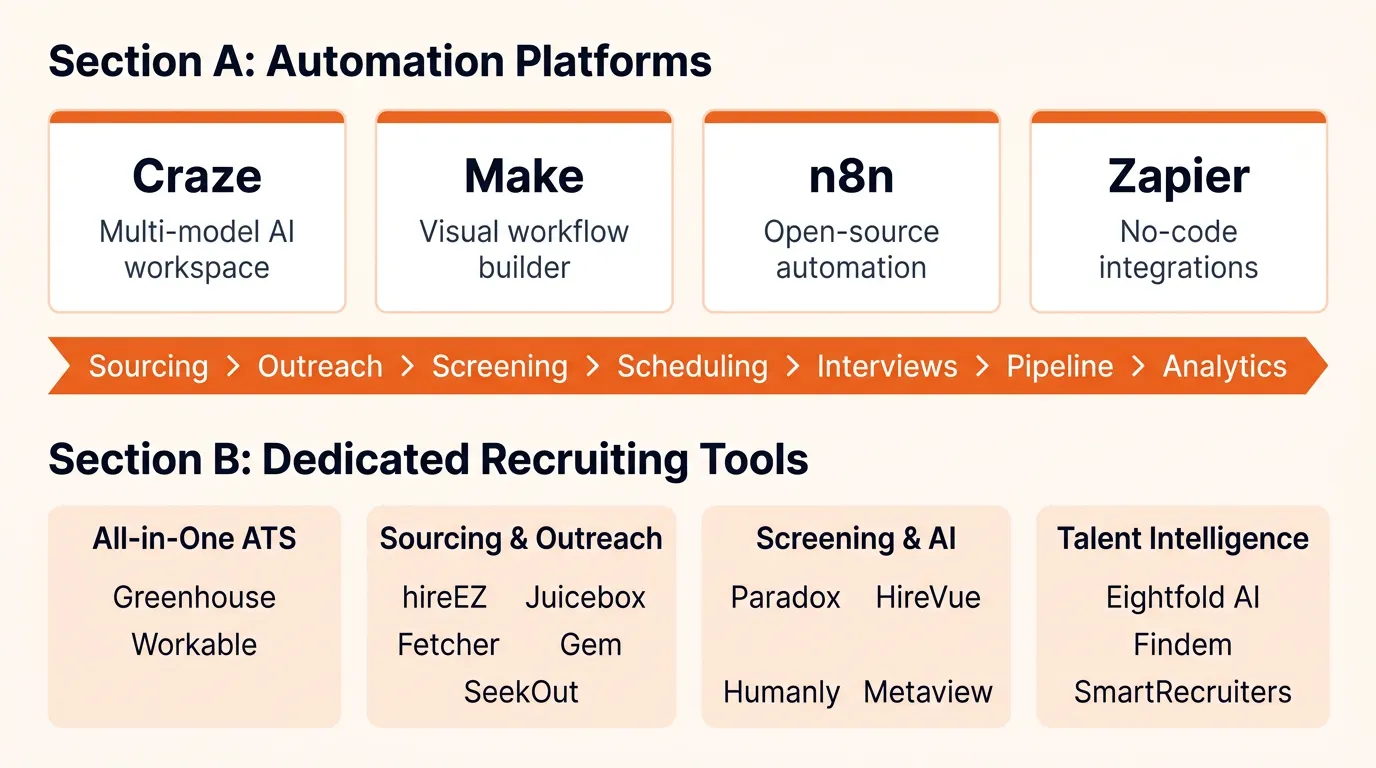
Section A: Automation Platforms for Recruiting
These are general-purpose AI and automation platforms that can automate recruiting workflows via agents, integrations, custom logic, or LLM routing, alongside many other use cases. They do not ship a pre-built ATS or recruiting-specific UI. Instead, they give you the building blocks to design workflows that match exactly how your team hires.
1. Craze
Craze is a multi-model AI workspace backed by Y Combinator and Nexus Venture Partners. Users can work with different LLMs in one place, create AI agents, and build automated workflows. For recruiting, that means you can set up agents that handle sourcing research, candidate outreach drafting, interview scheduling coordination, and pipeline reporting without being locked into a single recruiting tool’s way of doing things.
How it handles recruiting workflows:
- AI agents for sourcing. Build agents that research candidates across sources, summarize profiles, and rank matches based on criteria you define.
- Outreach automation. Use AI to draft personalized messages based on candidate profiles, then route them through your existing outreach channels.
- Workflow orchestration. Connect your ATS, calendar, email, and communication tools into automated sequences. When a candidate moves stages, the next step triggers automatically.
- Multi-model flexibility. Choose which LLM handles each task. Use a reasoning model for candidate evaluation, a fast model for drafting, and a different model for data extraction.
Craze is not a pre-built ATS. Its strength is flexibility: you design the workflow instead of adapting to someone else’s. The tradeoff is that you need to build the recruiting workflow yourself rather than getting one out of the box.
Pros:
- Multi-model AI workspace, not locked to a single LLM
- Flexible agent and workflow builder
- Handles recruiting alongside other business automation
Cons:
- Not a pre-built ATS; requires workflow setup
- Recruiting-specific features depend on how you configure agents
- Less out-of-the-box recruiting functionality than dedicated tools
Best for: Teams that want to automate recruiting workflows using AI agents alongside other business processes, with full control over the workflow design.

2. Make
Make is a visual automation platform that connects 2,000+ apps through a drag-and-drop scenario builder. For recruiting, Make can automate multi-step workflows across your ATS, email, calendar, Slack, and other tools without writing code.
How it handles recruiting workflows:
- Scenario builder. Create visual workflows that trigger when a candidate applies, moves stages, or responds to outreach. Each step connects to a different tool.
- ATS integrations. Native connectors for Greenhouse, Workable, Lever, and other major ATS platforms. Sync candidate data, update stages, and trigger actions across systems.
- Conditional logic. Route candidates through different workflows based on role type, seniority, location, or any data field. Send senior candidates to a different interview track than junior ones.
- AI modules. Connect to OpenAI, Claude, or other LLMs within workflows for tasks like resume summarization, screening question generation, or outreach personalization.
Make excels at connecting tools you already use. If your recruiting stack involves multiple standalone products, Make can be the glue that eliminates manual handoffs.
Pros:
- Visual, no-code scenario builder
- 2,000+ native app integrations
- Strong ATS connectors (Greenhouse, Workable, Lever)
Cons:
- No recruiting-specific AI models or features
- Debugging complex scenarios requires some technical comfort
Best for: Teams that use multiple recruiting tools and want to connect them visually without writing code.
3. n8n
n8n is an open-source workflow automation platform available as a self-hosted installation or a managed cloud service. It gives technical teams full control over their automation infrastructure, including the ability to run AI agents within workflows.
How it handles recruiting workflows:
- Self-hosted option. Run n8n on your own infrastructure for full data control, important for teams handling sensitive candidate data.
- AI workflow builder. Build AI-powered recruiting workflows using n8n’s native AI nodes. Connect to any LLM, build agent chains, and process candidate data programmatically.
- Code flexibility. Add custom JavaScript or Python code at any point in a workflow. Parse resumes, score candidates, transform data, or build custom logic that no pre-built tool supports.
- 400+ integrations. Connect to ATS platforms, email services, databases, messaging tools, and AI providers.
n8n is the most technically flexible option in this section. The tradeoff is that it requires more technical skill to set up and maintain than Make or Zapier.
Pros:
- Open source with self-hosted option for full data control
- AI workflow builder with native LLM nodes
- Custom code support (JavaScript, Python) at any workflow step
Cons:
- Steeper learning curve than Make or Zapier
- Self-hosted version requires DevOps maintenance
- Cloud service priced in EUR, which complicates budgeting for US teams
Best for: Technical recruiting teams that want full control over automation infrastructure, data handling, and AI agent design.
4. Zapier
Zapier is the most widely adopted no-code automation platform, connecting 7,000+ apps through simple trigger-action workflows called Zaps. Its massive integration library means it can connect practically any combination of recruiting tools.
How it handles recruiting workflows:
- 7,000+ app connectors. More native integrations than any other automation platform. If your ATS, email tool, or scheduling app exists, Zapier probably connects to it.
- Multi-step Zaps. Build workflows that chain multiple actions: when a candidate applies in Greenhouse, send a Slack notification, add them to a spreadsheet, trigger an email sequence, and update your CRM.
- Tables and forms. Built-in database tables and form builders let you create lightweight candidate intake forms and tracking systems without a separate tool.
- AI agents. Zapier’s AI features can process data, make decisions, and draft content within workflows.
Zapier is the easiest automation platform to start with. The tradeoff is that complex workflows with many steps can get expensive quickly due to task-based pricing.
Pros:
- 7,000+ native integrations, largest library available
- Easiest setup among automation platforms
- Built-in Tables and Forms for lightweight candidate tracking
- Strong community templates for recruiting workflows
Cons:
- Less flexibility than n8n for custom code or AI agent design
- Complex workflows can be harder to debug than Make’s visual builder
Best for: Non-technical recruiting teams that want the simplest way to connect their existing tools and automate handoffs.
Section B: Dedicated Recruiting Tools
These are purpose-built platforms designed specifically for recruiting. They ship with recruiting-specific AI models, pre-built workflows, and UIs designed for hiring teams. You get faster time-to-value but less flexibility than automation platforms.
All-in-One AI Recruiting Platforms
5. Greenhouse
Greenhouse is one of the most widely adopted ATS platforms in the US, known for its structured hiring methodology. AI features supplement the core ATS: resume parsing, candidate matching suggestions, and automated screening questions help move candidates through defined stages.
What it does:
- Scorecard-based evaluation ensures consistency across interviewers
- AI-assisted screening filters applicants based on job criteria
- One of the largest integration marketplaces (400+ partners) in the ATS space
- Strong reporting and compliance features for enterprise teams
Best for: Mid-to-large teams that want structured, scorecard-driven hiring with AI assist.
6. Workable
Workable combines applicant tracking with AI-powered candidate suggestions, one-click posting to 200+ job boards, and built-in video interview capabilities. It is one of the fastest ATS platforms to set up and start using.
What it does:
- AI candidate recommendations from a database of 400M+ profiles
- One-click posting to 200+ job boards
- Built-in video interviews and assessments
- Automated screening questions and interview scorecards
Best for: SMBs that want an easy-to-use ATS with AI features and built-in video interviews.
AI Sourcing and Outreach Tools
For teams whose primary bottleneck is finding candidates rather than managing them, these tools specialize in AI-powered sourcing and outreach.
7. hireEZ

hireEZ (formerly Hiretual) specializes in outbound sourcing at scale. Its AI searches across 800M+ candidate profiles from LinkedIn, GitHub, professional associations, and other public sources, then layers on engagement and outreach features.
What it does:
- AI sourcing across 800M+ profiles with boolean and NLP search
- Talent rediscovery from your existing ATS to surface overlooked candidates
- Outreach sequencing and automated follow-ups
- DEI filters and diversity analytics for inclusive sourcing
Best for: Sourcing-heavy teams that need AI-powered search across the open web and internal databases.
8. Juicebox (PeopleGPT)
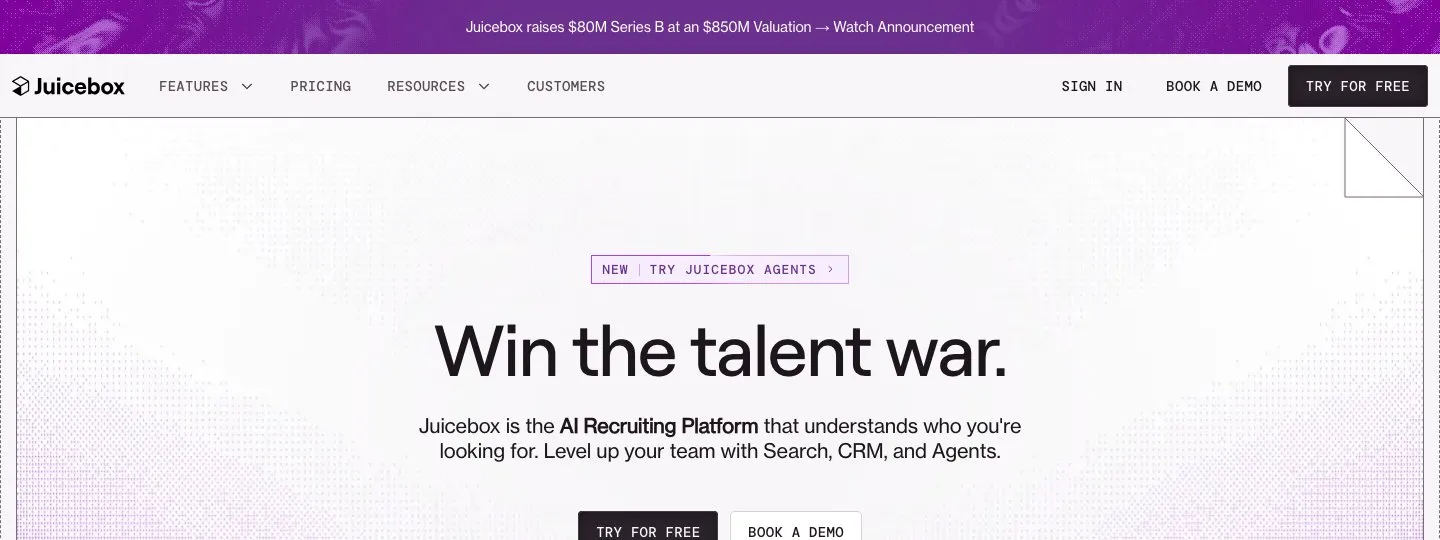
Juicebox takes a search-engine approach to sourcing. Type what you are looking for in plain English, and its AI returns ranked candidates with Spotlight summaries that explain why each person matches. It recently expanded into CRM and agentic workflow features.
What it does:
- Natural language people search (no boolean syntax needed)
- AI Spotlight summaries explaining candidate fit
- CRM and candidate engagement workflows
- Agentic features for automated sourcing sequences
Best for: Recruiters who want natural language candidate search without writing boolean strings.
9. Fetcher
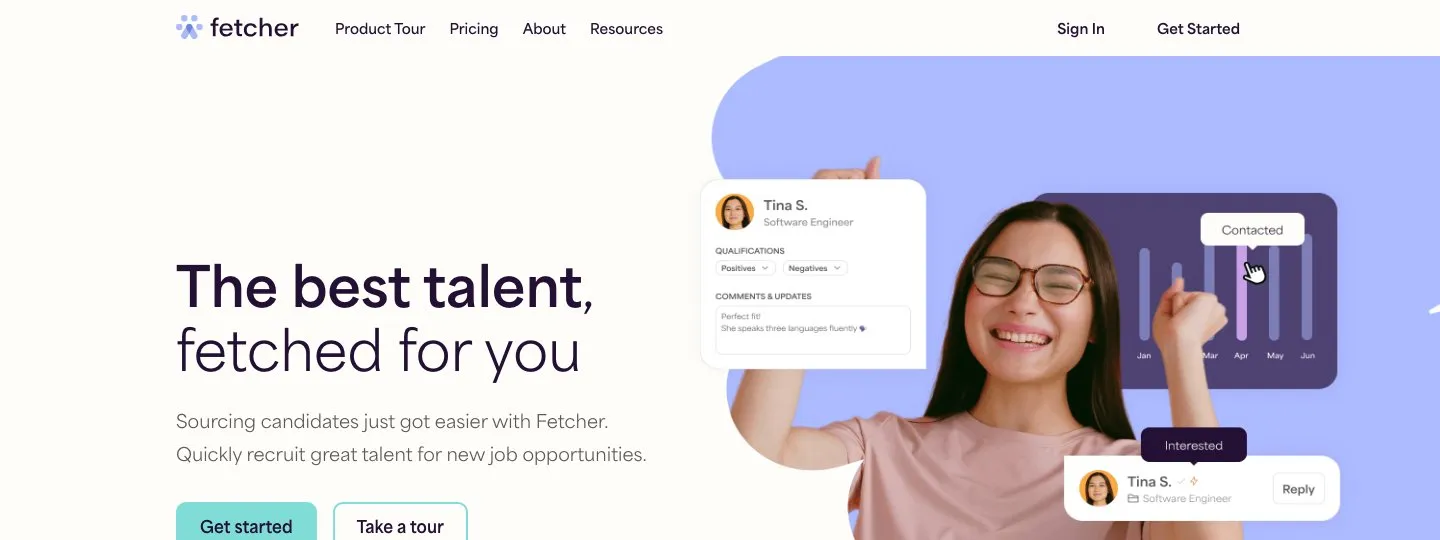
Fetcher combines AI-powered sourcing with human researcher verification. The AI surfaces candidate matches; a human team reviews them before delivering batches to your inbox. This hybrid approach aims to reduce the noise that fully automated sourcing tools sometimes produce.
What it does:
- AI sources candidates based on job criteria
- Human researchers verify and curate each batch
- Automated drip outreach campaigns
- Integrations with Greenhouse, Lever, and other major ATS platforms
Best for: Lean recruiting teams that want AI sourcing paired with human-curated candidate batches.
10. Gem
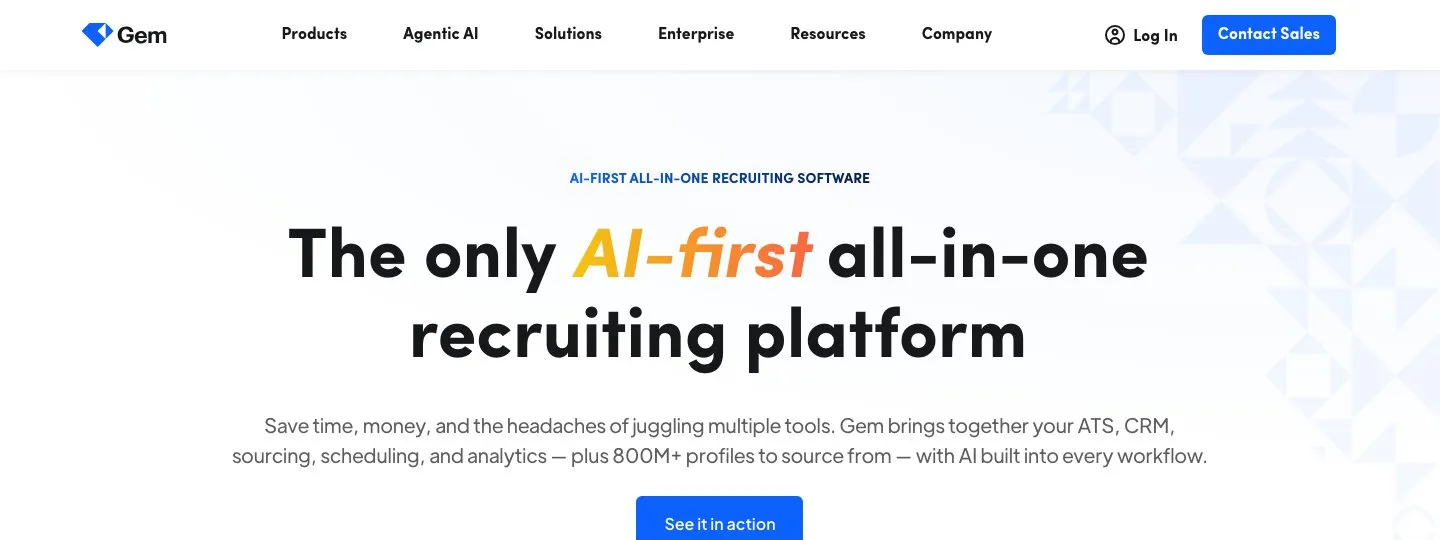
Gem sits between a sourcing tool and a CRM, excelling at outreach performance tracking and pipeline visibility. It is popular with teams that want to understand which channels, messages, and sequences actually drive candidate engagement.
What it does:
- Multi-touch outreach sequences across email and LinkedIn
- Response rate and engagement analytics across campaigns
- Pipeline forecasting using historical hiring data
- Pass-through and drop-off visibility at each hiring stage
Best for: Outbound recruiting teams focused on pipeline analytics and nurture sequences.
11. SeekOut
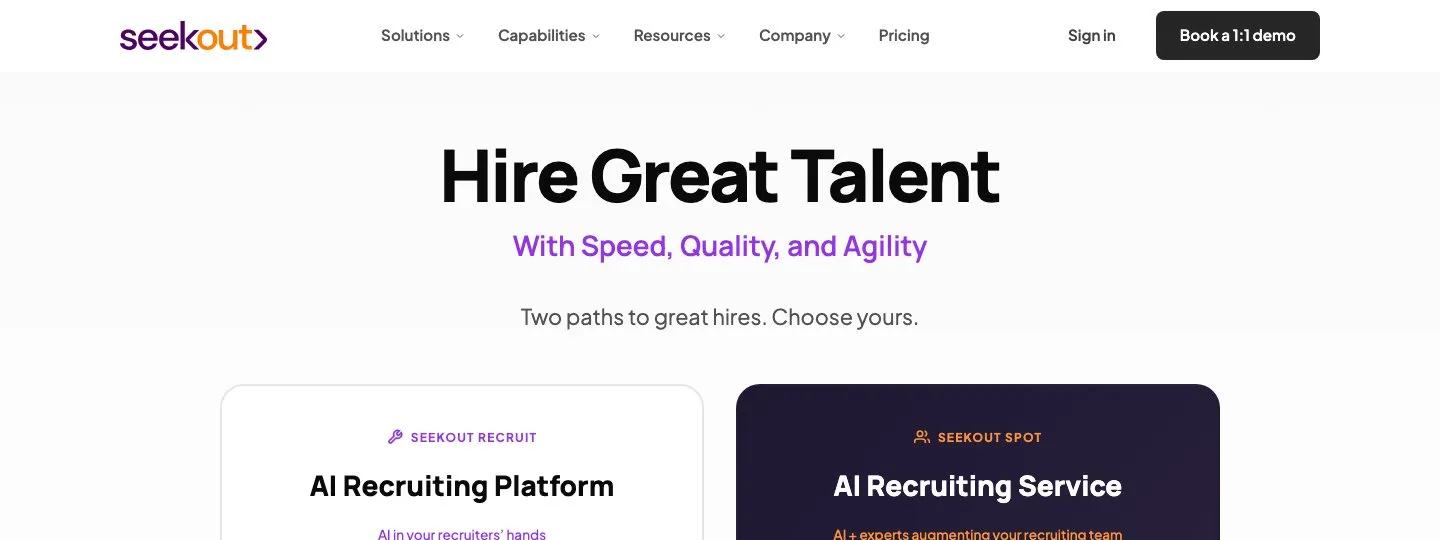
SeekOut taps into over 1 billion profiles, including patent records, GitHub contributions, and academic publications. Its AI-powered matching goes deep on technical skills, and its diversity analytics help teams build more inclusive pipelines.
What it does:
- AI search across 1B+ profiles with deep technical data
- Patent, GitHub, and publication matching for niche roles
- Diversity analytics and underrepresented group sourcing
- SeekOut Assist for AI-generated candidate lists from job descriptions
Best for: Technical hiring teams and organizations prioritizing diversity sourcing at enterprise scale.
Screening, Interviews, and Conversational AI
12. Paradox (Olivia)
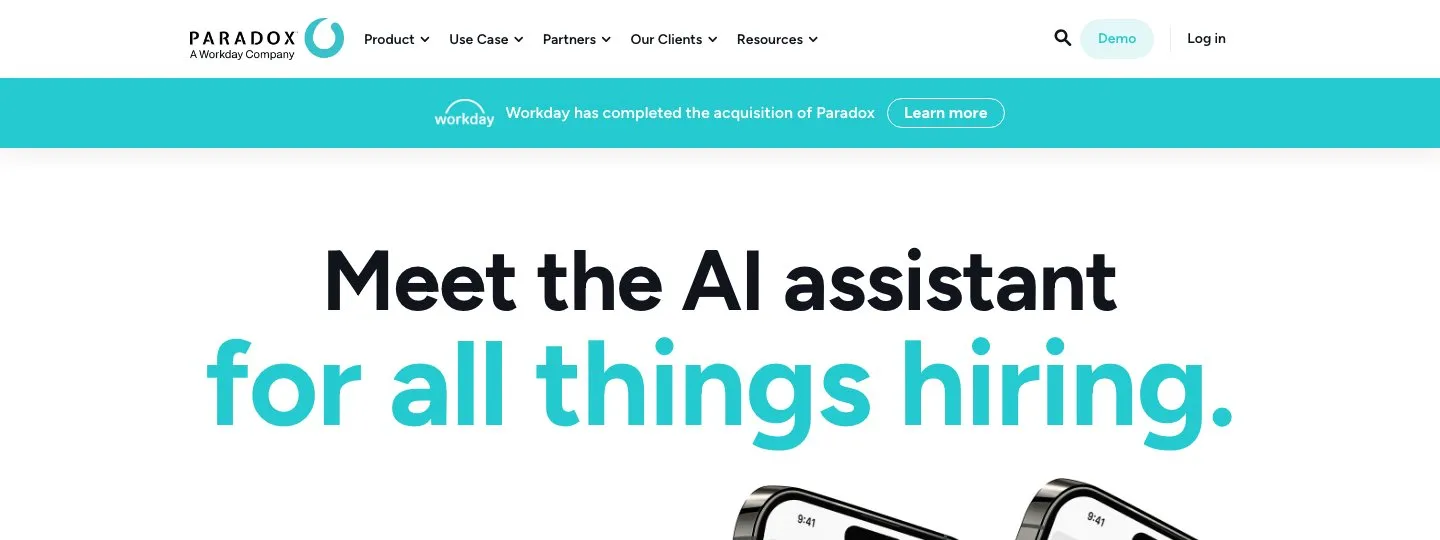
Paradox’s AI assistant Olivia automates the front of the hiring funnel through conversational interactions. Candidates can text or chat with Olivia to answer screening questions, schedule interviews, and get status updates, all without a recruiter touching the process.
What it does:
- Conversational candidate screening via text, chat, and WhatsApp
- Automated interview scheduling with smart calendar coordination
- Event and career fair hiring management
- High-volume communication handling for hourly and retail roles
Best for: High-volume and hourly hiring teams that need conversational AI for screening and scheduling.
13. HireVue
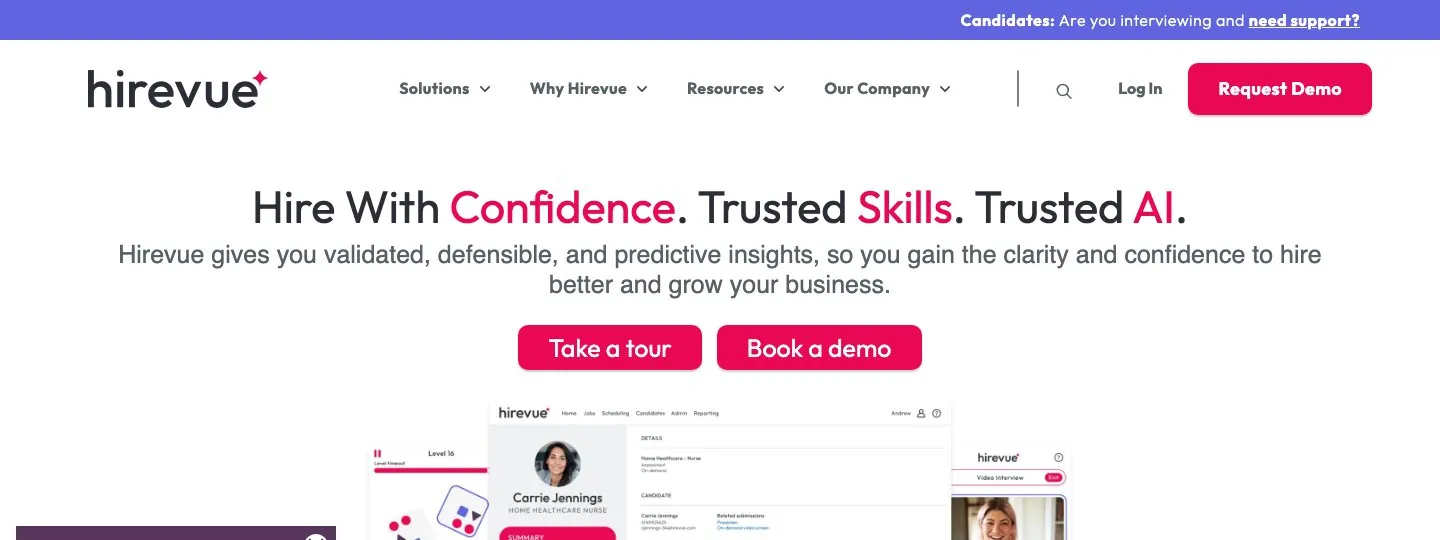
HireVue pioneered AI-powered video interviewing and has evolved into a broader assessment platform. Candidates complete on-demand video interviews evaluated against structured criteria, and recruiters get scored summaries.
What it does:
- On-demand and live video interviews with AI evaluation
- Structured interview guides aligned to job competencies
- Game-based and coding assessments
- Compliance documentation for regulated industries
Best for: Enterprise teams running AI-enabled video interviews and structured assessments at scale.
14. Humanly
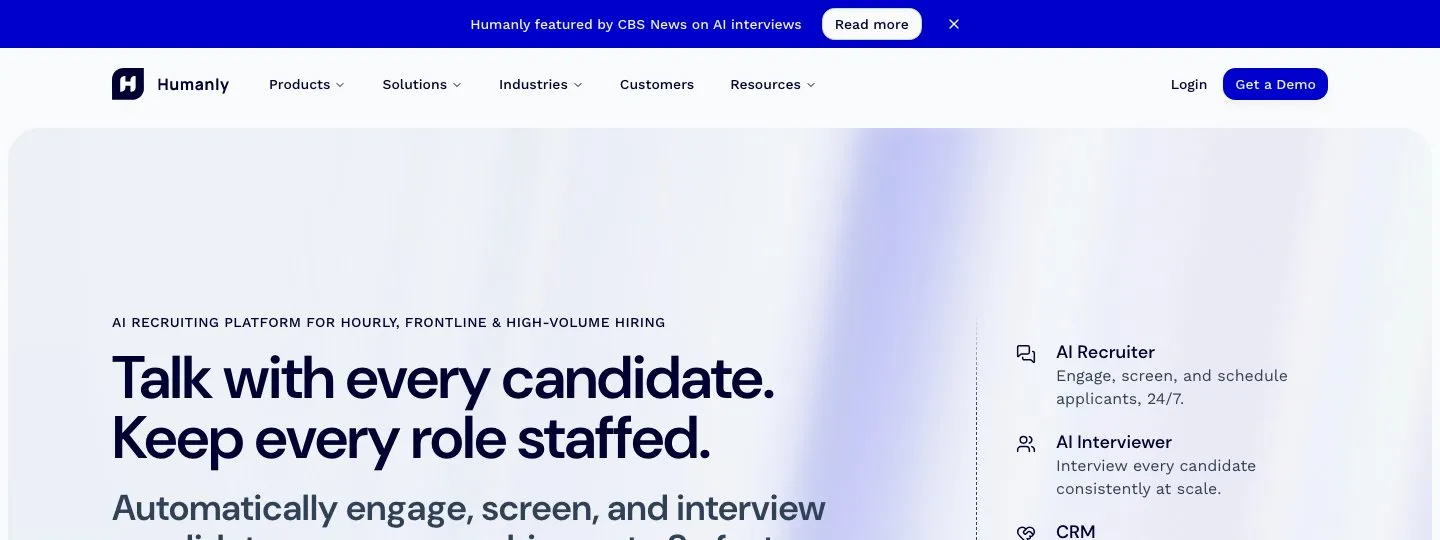
Humanly combines chatbot-driven candidate screening with real-time analytics and bias mitigation tools. Its AI co-pilot handles initial candidate vetting at scale, joins video interviews for note-taking, and flags potential bias in hiring patterns.
What it does:
- AI chatbot screening that vets candidates conversationally
- Bias mitigation tools that flag problematic patterns
- AI interview note-taking and insight capture
- Real-time analytics on screening outcomes and candidate experience
Best for: Mid-size organizations that want conversational AI screening with built-in bias mitigation.
15. Metaview
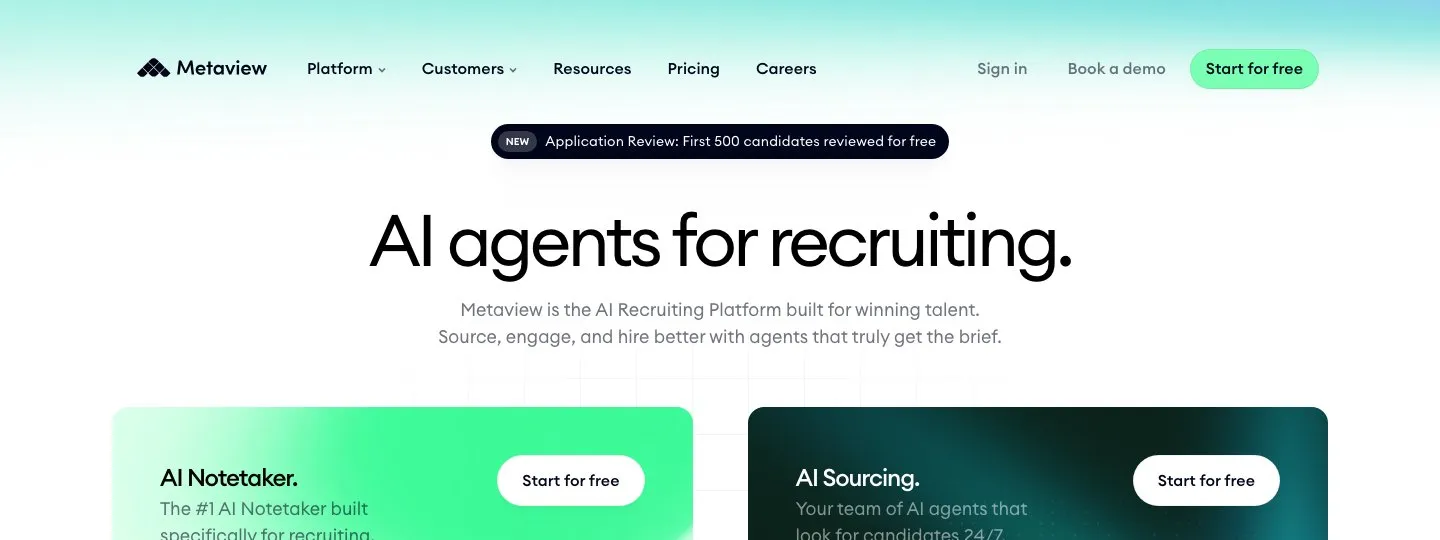
Metaview focuses on what happens after a candidate enters the interview stage. Its AI joins interviews, takes detailed notes, and generates structured summaries and scorecards so interviewers can focus on the conversation rather than documentation.
What it does:
- AI-generated interview notes and summaries
- Structured scorecards aligned to job criteria
- Integration with major ATS and video conferencing platforms
- Coaching insights for interviewer improvement
Best for: Teams that want to improve interview quality through AI-generated notes and structured scorecards.
Talent Intelligence and Enterprise Platforms
16. Eightfold AI
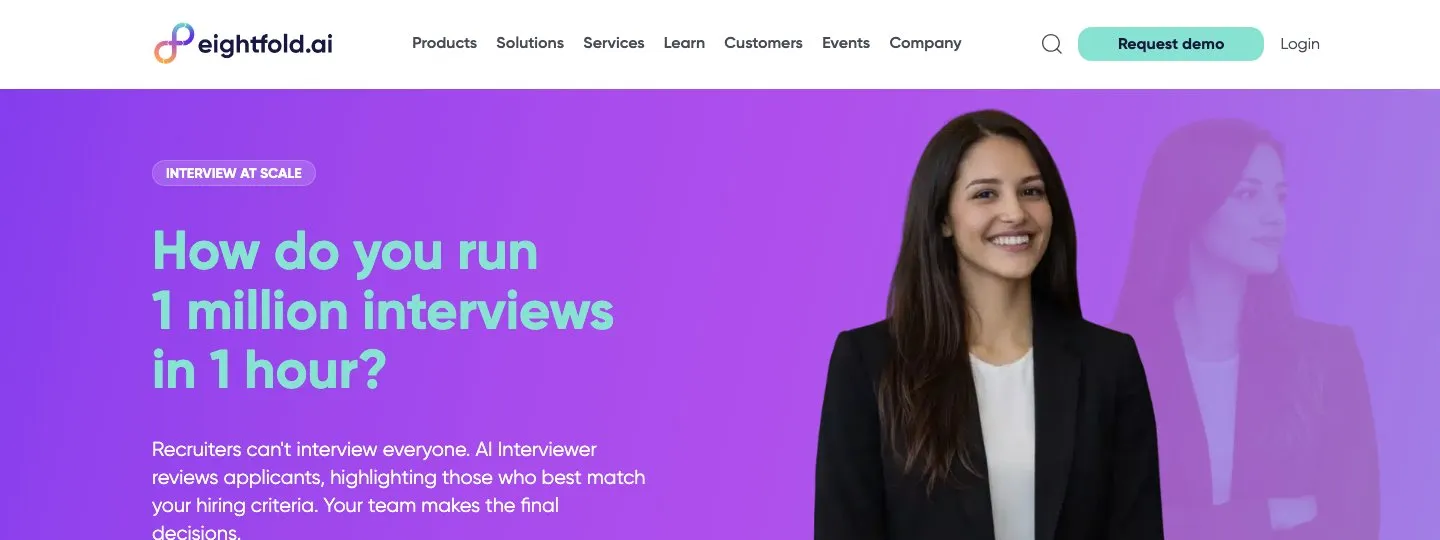
Eightfold takes a fundamentally different approach from most recruiting tools. Instead of focusing on job titles and resumes, its deep-learning model maps skills, career trajectories, and potential across billions of talent signals. It supports external hiring, internal mobility, workforce planning, and diversity analytics.
What it does:
- Deep-learning talent matching based on skills and career potential
- Skills inference that identifies transferable capabilities across roles
- Internal mobility and career pathing for existing employees
- Workforce planning and talent market analytics
- Diversity analytics integrated into talent decisions
Best for: Enterprise organizations investing in skills-based hiring, talent intelligence, and internal mobility.
17. Findem
Findem moves beyond keyword and title matching by using attribute-based search. Instead of searching for “product manager,” you can search for candidates with specific combinations of experience attributes (for example, “led a 0-to-1 product launch at a Series B startup in the health tech space”). Its agentic AI can automate multi-step sourcing workflows.
What it does:
- Attribute-based talent search beyond keywords
- Agentic AI workflows that automate sourcing sequences
- Talent market analytics and competitive intelligence
- Diversity insights and pipeline analytics
Best for: Enterprise hiring teams that need attribute-based sourcing with agentic AI workflows.
18. SmartRecruiters
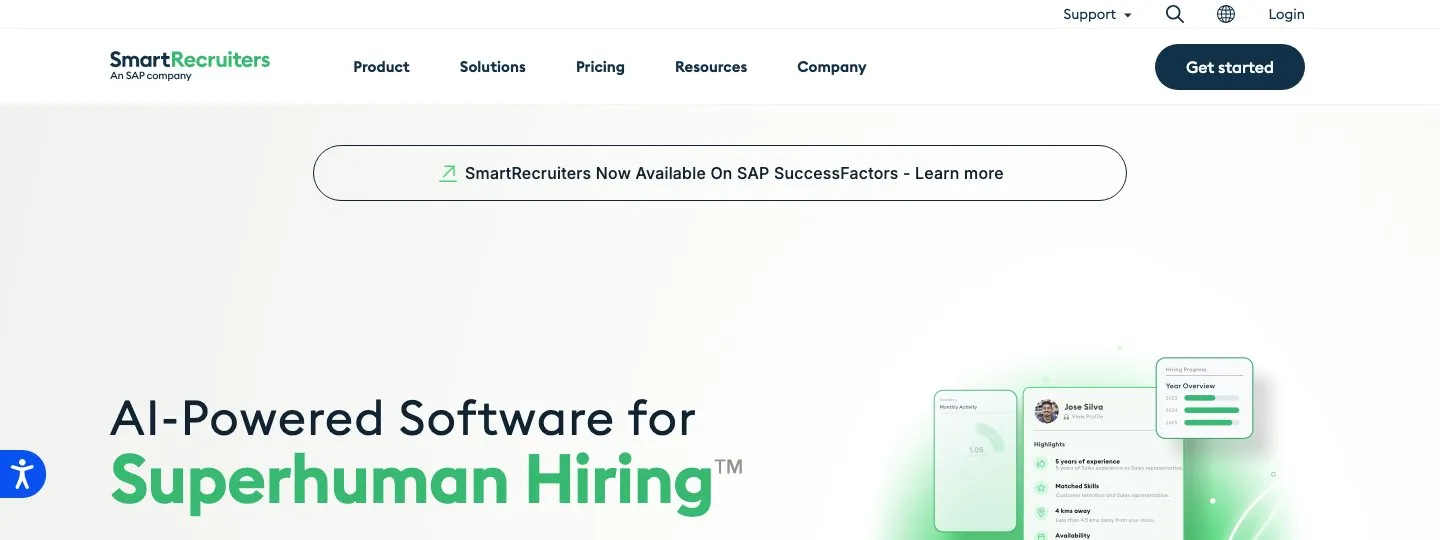
SmartRecruiters is an enterprise ATS that applies AI to candidate screening, matching, and workflow automation within tightly defined hiring processes. It is built for organizations that need consistency, compliance, and process control across regions and teams.
What it does:
- AI-assisted candidate screening and ranking within ATS workflows
- Automated candidate matching across active pipelines
- Workflow automation for approvals, stage movement, and task assignments
- Global hiring support with compliance controls
Best for: Large organizations that need AI embedded within a structured, compliance-first ATS.
What AI Recruiting Tools Actually Automate (and What They Do Not)
Understanding what AI agents in recruiting can and cannot do will help you set realistic expectations before investing.
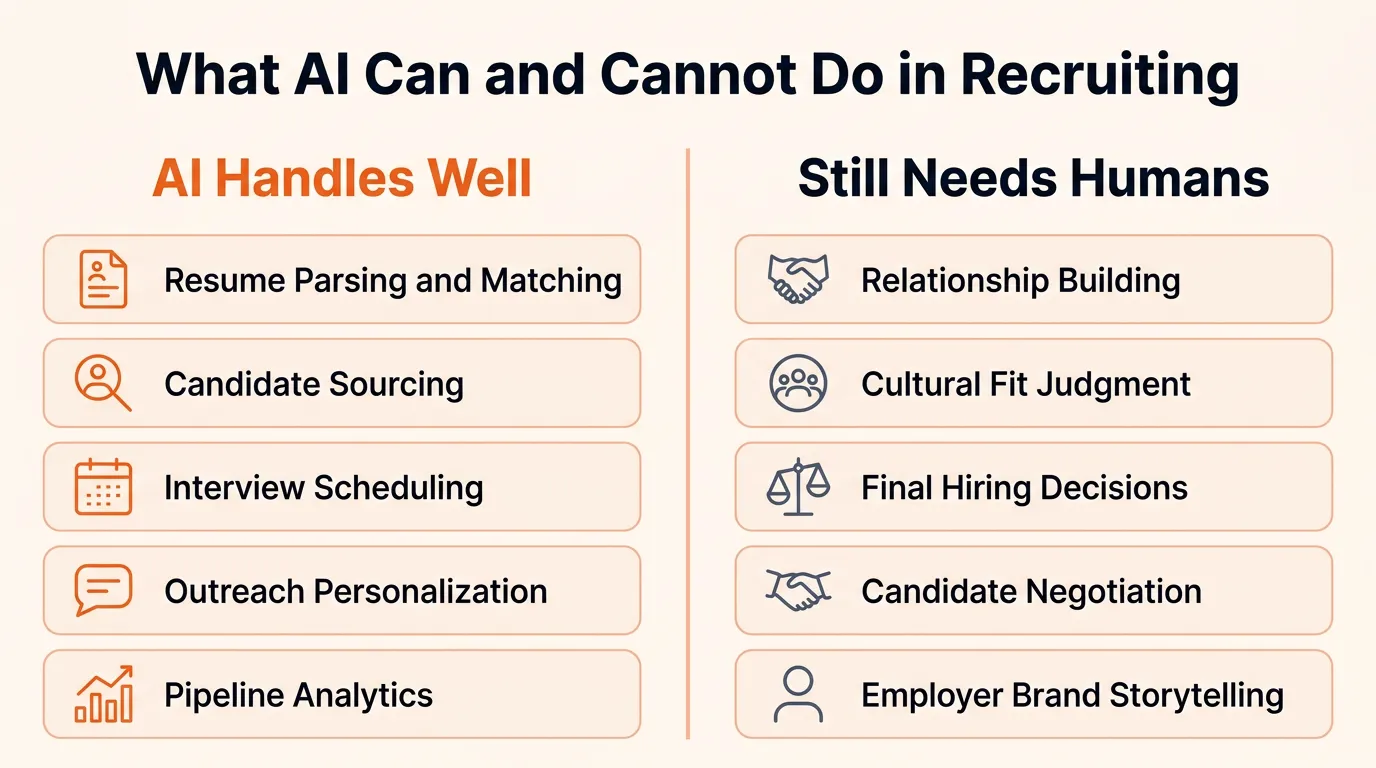
AI handles repetitive, pattern-based tasks well:
- Resume parsing and candidate matching. AI can screen thousands of resumes in minutes and rank candidates by fit.
- Sourcing from large databases. NLP and machine learning surface relevant candidates faster than manual boolean searches.
- Scheduling coordination. AI manages calendar conflicts, time zones, and interviewer availability without back-and-forth emails.
- Outreach personalization. AI can draft messages based on a candidate’s actual profile, not just insert a first name into a template.
- Pipeline analytics. AI identifies bottlenecks, predicts time-to-fill, and flags drop-off points.
- Cross-tool automation. Automation platforms can trigger actions across your entire recruiting stack when candidates move between stages.
AI does not replace:
- Relationship building. Candidates still choose companies based on human connection, trust, and how valued they feel during the process.
- Cultural fit judgment. No algorithm reliably assesses whether someone will thrive in your specific team culture.
- Final hiring decisions. AI can rank and recommend. Humans decide.
- Negotiation. Closing a candidate involves nuance, empathy, and real-time adaptation that AI cannot replicate.
- Employer brand storytelling. Your company’s story needs to come from real humans, not generated copy.
If a tool promises “fully automated hiring,” treat that as a red flag. The best AI recruiting tools make recruiters faster and better informed, not obsolete. Teams that treat AI as a way to automate their recruitment process thoughtfully, rather than as a replacement for human judgment, see the strongest results.
Final Verdict: Which AI Recruiting Tool Should You Pick?
There is no single best tool. The right choice depends on your hiring bottleneck, team size, budget, and whether you need a dedicated recruiting platform or a flexible automation layer.
When to pick an automation platform
- You already use multiple recruiting tools and need to connect them. Make, Zapier, and n8n excel at bridging gaps between existing tools.
- You want to automate recruiting alongside other business processes. Craze and similar AI workspaces let you handle recruiting, operations, and other workflows in one place.
- Your hiring process is non-standard and you need custom workflows rather than pre-built features.
- You want full control over data and AI model selection. n8n (self-hosted) and Craze (multi-model) give you that flexibility.
When to pick a dedicated recruiting tool
- You need a ready-to-use ATS with AI features out of the box. Greenhouse or SmartRecruiters for enterprise, Workable for SMBs.
- Your bottleneck is sourcing and you need volume. hireEZ for maximum profile coverage, or Juicebox for the most intuitive search experience.
- You are hiring hourly or high-volume roles. Paradox. Olivia handles front-of-funnel screening and scheduling better than any other conversational AI.
- You need enterprise talent intelligence and internal mobility. Eightfold AI. No other tool matches its depth in skills-based matching and workforce planning.
- Interview quality is your gap. Metaview. Free to start, and it transforms interview feedback quality immediately.
Start with a focused pilot on your biggest bottleneck. Most teams get the clearest signal from a 60 to 90 day test on a single workflow before expanding to additional tools or features.
FAQs
What are the best AI recruiting tools in 2026?
The top dedicated AI recruiting tools for 2026 include hireEZ (best for outbound sourcing at scale), Eightfold AI (best for enterprise talent intelligence), Paradox (best for high-volume conversational AI), and Greenhouse (best for structured hiring). General-purpose automation platforms like Craze, Make, n8n, and Zapier can also automate recruiting workflows via AI agents and integrations. The right choice depends on your team size, hiring volume, and whether you need a purpose-built recruiting tool or a flexible automation platform.
How do AI recruiting tools differ from traditional applicant tracking systems?
Traditional ATS platforms manage workflow and store candidate records. AI recruiting tools add predictive matching, automated sourcing across external databases, NLP search, intelligent scheduling, and analytics-driven insights on top of pipeline management. Dedicated tools like Greenhouse combine ATS and AI in one system. Point solutions like hireEZ and Juicebox plug into an existing ATS. Automation platforms like Craze and Make take a different approach, letting you build custom recruiting workflows using AI agents and integrations rather than shipping a pre-built ATS.
What AI recruiting tools reduce time-to-fill?
Tools that automate sourcing (hireEZ, Juicebox), scheduling (Paradox), and screening (HireVue, Humanly) have the most direct impact on time-to-fill. Automation platforms like Craze and Zapier can also reduce time-to-fill by connecting recruiting tools and automating handoffs between stages. The biggest gains typically come from eliminating manual calendar coordination and initial screening bottlenecks.
How do I integrate AI recruiting tools with my existing ATS?
Most AI recruiting tools offer native integrations with Greenhouse, Lever, Workday, and other popular ATS platforms. Before committing, verify whether the integration syncs candidate data bidirectionally, preserves activity logs, and avoids creating duplicate records. Automation platforms like Make, n8n, and Zapier can bridge tools that lack native integrations, though API-based setups require more maintenance.
Which AI recruiting tools actually work?
Tools with clear, measurable outcomes in at least one workflow stage (sourcing, screening, or scheduling) tend to deliver real value. Avoid tools that promise end-to-end automation without specifics. Run a 60 to 90 day pilot on your biggest bottleneck and measure time-to-fill, candidate response rates, and recruiter hours saved before committing to an annual contract.
How do I audit AI recruiting tools for fairness?
Request the vendor's bias audit report, required under NYC Local Law 144 for automated hiring tools. Test for disparate impact across protected groups. Check if the tool logs AI decisions with explainable reasoning. Illinois AIPA requires consent for AI video interviews. The EEOC has guidance on algorithmic fairness. If a vendor cannot produce audit data, treat it as a serious risk signal.
Should I use an automation platform or a dedicated recruiting tool?
Dedicated recruiting tools (Greenhouse, hireEZ, Paradox) come with pre-built workflows, domain-specific AI models, and recruiting-specific features out of the box. Automation platforms (Craze, Make, n8n, Zapier) let you build custom workflows, connect multiple tools, and handle recruiting alongside other business processes. If your hiring process is standard and you want quick setup, go dedicated. If you need flexibility, already use multiple tools, or want to automate recruiting as part of broader operations, consider an automation platform.
More Articles
15+ AI Agent Examples That Are Actually Delivering Results

See real AI agent examples from companies like Uber, TELUS, and Intercom. Organized by function with actual business results, not just product names.
AI Agent Builders: How to Pick the Right Approach for Your Team
Compare no-code AI agent builders, developer frameworks, and custom approaches. Includes a decision matrix, cost ranges, and production readiness checklist.
How to Build an AI Agent (Even If You Can't Code)
Learn how to build an AI agent using no-code tools, frameworks like LangChain, or custom Python. Covers scoping, costs, and mistakes to avoid.


